1. Introduction
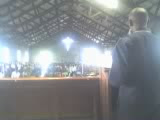
On April 24th, 2010, AGIR ENSEMBLE has organized a Raising Awareness Session (RAS) on tobacco control for youth in the church community (CBCA KESHERO) in the city of Goma. We had planned to join together 50 young people of the community church and inform them that tobacco is dangerous for their health and explain them the strategies used by the industry to grow its clients.
This session took place normally as expected and got the audience of 59 young people joining the meeting.
The duration of the event was 2 hours from 2:00 pm to 4:00 pm.
2. Objective of the session
AGIR ENSEMBLE, in its commitment of spreading information which can save lives and maintain the health of population in the community, settled following objectives for this session:
- Bring together a group of 50 young people from KESHERO CBCA community church, who can receive the message that tobacco is a global priority of public health,
- To teach to the group how to protect himself and to protect others against tobacco smoking, the reason of not begin smoking and at the end of the session at least 95 % of participants will know correctly the importance of not to begin smoking.
3. Context of organization
Considering the financial difficulty, the event was held in the worship hall of KESHERO CBCA CHURCH from 2:00 pm till 4:00 pm. The event has been attended by 59 persons among whom 38 females and 21 males. We didn’t find possibility to make T-SHIRTS for participants.
4. Progress of the event
The event took place around the subject:
"Tobacco and youth", the role of youth in tackling tobacco usage.
The moderator of the session was Mr. Alphonse KAVWIRWA, president of the Board of AGIR ENSEMBLE and the speaker was Dr Mateus KAMBALE SAHANI, the director of the Health Department of AGIR ENSEMBLE.
The session began with the allocution of the president of AGIR ENSEMBLE, Mr. Alphonse KAVWIRWA who welcomed all participants to the session of the day and presented the missions of AGIR ENSEMBLE.
Then Dr Mateus SAHANI began explaining the background of the event and presented the relevance of acting against tobacco. “Most importantly, our collective voice must show our commitment to fight tobacco in our community and worldwide and it must be a global priority for the public health” he said.
After this, the speaker began the session “Tobacco and Youth, the role of young people in the fight against tobacco” in which he gave the place held by tobacco as a big public health threat. “Tobacco is the first Risk factor of cancer and kills each year 5.4 million people worldwide and cancer is becoming the leading cause of death worldwide. We know that cancer kills 8 million people each year and if nothing is done by now cancer will kill 12 million of people. Every one may act by now if you want to save the 28 million of people living with cancer in the world and if you want to address the cancer burden worldwide. The voice of each one is needed for the fight”, he said.
Then some questions were asked and answered by the speaker. All participants were interested by the session of the day and 15 questions have been received. Almost all questions were well answered. After this a cocktail was offered to participants.
5. Participants
In total 59 people attended the meeting among whom 38 females and 21 males and were interested by the theme of the day.
6. Evaluation of the session.
We expected 50 people for the meeting and brought together 59. This objective was reached in 118%. The second objective was reached in 90%. In all our performance was 104%. The main barriers for us to reach our maximum of goals were the background of the organization of the event, and missing financial support and we didn’t be able to organize transport for participants.
7. Questions and recommendations
Some pertinent Questions
- What is the importance of tobacco for community and for smokers?
- If tobacco kills 5.4 million of people each year, why is it allowed to be selled?
- Are governments aware that tobacco kills people and cause diseases? What are they doing to protect people?
- What can be our attitude as young people towards our parents who smoke?
- What is the good strategy we can use to sensitizer our parents who smoke?
- What can be the attitude of a wife towards her husband who is smoking?
- Why industry targets young for its activities?
Recommendations
At the end of the event, participants have recommended:
- To organize multiple sessions like this one to allow spreading the message that can save lives of population.
- To choose a place and a moment which allow more people to attend the event for the next time.
- Such events need financial support for a real success: media campaigns, advocacy with politicians, etc. Can LAF help us?
8. Conclusions
Generally the activities of the planned were well realized and it was a real success even if there were some difficulties. All was done as planed and our objectives were reached. Participants were satisfied by the event and the message was new for almost 97% of them. They recommend us to them more information and strategies to allow them to sensitizer their parents who are smoking and they ask us to give them some posters to be used in their living rooms.
Goma, April 24th, 2010.
Dr Mateus KAMBALE SAHANI
AGIR ENSEMBLE/DRC
jeudi 27 mai 2010
Raising Awareness Session in Goma/DRC
1. Introduction
On April 24th, 2010, AGIR ENSEMBLE has organized a Raising Awareness Session (RAS) on tobacco control for youth in the church community (CBCA KESHERO) in the city of Goma. We had planned to join together 50 young people of the community church and inform them that tobacco is dangerous for their health and explain them the strategies used by the industry to grow its clients.
This session took place normally as expected and got the audience of 59 young people joining the meeting.
The duration of the event was 2 hours from 2:00 pm to 4:00 pm.
2. Objective of the session
AGIR ENSEMBLE, in its commitment of spreading information which can save lives and maintain the health of population in the community, settled following objectives for this session:
- Bring together a group of 50 young people from KESHERO CBCA community church, who can receive the message that tobacco is a global priority of public health,
- To teach to the group how to protect himself and to protect others against tobacco smoking, the reason of not begin smoking and at the end of the session at least 95 % of participants will know correctly the importance of not to begin smoking.
3. Context of organization
Considering the financial difficulty, the event was held in the worship hall of KESHERO CBCA CHURCH from 2:00 pm till 4:00 pm. The event has been attended by 59 persons among whom 38 females and 21 males. We didn’t find possibility to make T-SHIRTS for participants.
4. Progress of the event
The event took place around the subject:
"Tobacco and youth", the role of youth in tackling tobacco usage.
The moderator of the session was Mr. Alphonse KAVWIRWA, president of the Board of AGIR ENSEMBLE and the speaker was Dr Mateus KAMBALE SAHANI, the director of the Health Department of AGIR ENSEMBLE.
The session began with the allocution of the president of AGIR ENSEMBLE, Mr. Alphonse KAVWIRWA who welcomed all participants to the session of the day and presented the missions of AGIR ENSEMBLE.
Then Dr Mateus SAHANI began explaining the background of the event and presented the relevance of acting against tobacco. “Most importantly, our collective voice must show our commitment to fight tobacco in our community and worldwide and it must be a global priority for the public health” he said.
After this, the speaker began the session “Tobacco and Youth, the role of young people in the fight against tobacco” in which he gave the place held by tobacco as a big public health threat. “Tobacco is the first Risk factor of cancer and kills each year 5.4 million people worldwide and cancer is becoming the leading cause of death worldwide. We know that cancer kills 8 million people each year and if nothing is done by now cancer will kill 12 million of people. Every one may act by now if you want to save the 28 million of people living with cancer in the world and if you want to address the cancer burden worldwide. The voice of each one is needed for the fight”, he said.
Then some questions were asked and answered by the speaker. All participants were interested by the session of the day and 15 questions have been received. Almost all questions were well answered. After this a cocktail was offered to participants.
5. Participants
In total 59 people attended the meeting among whom 38 females and 21 males and were interested by the theme of the day.
6. Evaluation of the session.
We expected 50 people for the meeting and brought together 59. This objective was reached in 118%. The second objective was reached in 90%. In all our performance was 104%. The main barriers for us to reach our maximum of goals were the background of the organization of the event, and missing financial support and we didn’t be able to organize transport for participants.
7. Questions and recommendations
Some pertinent Questions
- What is the importance of tobacco for community and for smokers?
- If tobacco kills 5.4 million of people each year, why is it allowed to be selled?
- Are governments aware that tobacco kills people and cause diseases? What are they doing to protect people?
- What can be our attitude as young people towards our parents who smoke?
- What is the good strategy we can use to sensitizer our parents who smoke?
- What can be the attitude of a wife towards her husband who is smoking?
- Why industry targets young for its activities?
Recommendations
At the end of the event, participants have recommended:
- To organize multiple sessions like this one to allow spreading the message that can save lives of population.
- To choose a place and a moment which allow more people to attend the event for the next time.
- Such events need financial support for a real success: media campaigns, advocacy with politicians, etc. Can LAF help us?
8. Conclusions
Generally the activities of the planned were well realized and it was a real success even if there were some difficulties. All was done as planed and our objectives were reached. Participants were satisfied by the event and the message was new for almost 97% of them. They recommend us to them more information and strategies to allow them to sensitizer their parents who are smoking and they ask us to give them some posters to be used in their living rooms.
Goma, April 24th, 2010.
Dr Mateus KAMBALE SAHANI
AGIR ENSEMBLE/DRC


samedi 20 février 2010
World Cancer day, 4 February 2010 in Goma


 AGIR ENSEMBLE has organized a public debate on cancer focusing on the campaign slogan: “cancer can be prevented too”. The target people were teachers of Visoke institute.
The event took place in one of the classrooms of the school (Visoke Institute) on February 4th, 2010 directly after courses from 12:45 – 16:00.
The official langage of the event was French.
The event has begun with presentation of participants and a little presentation on mission of AGIR ENSEMBLE. The moderator was Mr Paul and was in charge of taking picture.
The speaker was Dr Mateus Kambale Sahani (in yellow T-SHIRT). After presentation, the speaker begun with the topic: “Cancer, a global priority” and after he continued by giving the key messages of the campaign through the topic: “Cancer can be prevented too”. The speaker has insisted on some simple measures to prevent cancer and this was received by participants as good news because all of them didn’t know that it could be possible to prevent cancer.
Then, the moderator opened the debate and 15 questions have been received and all found responses.
At the end, Dr Mateus gave the press release, key messages and the Diary notes to the headmaster of the school (Visoke institute).
After this, some recommendations were given by participants:
1. for next time, to invite more people and look for a common moment and sufficient time to allow people to understand better the matter of cancer, screening for cervical cancer, breast cancer, tobacco control, etc.
2. the headmaster has asked to AGIR ENSEMBLE to do more sessions of raising awareness for their pupils and said that they need more posters for their classrooms and the public room of teachers.
Some key outcomes:
At the end of the day activities:
1. All participants have understood and convinced that cancer can be prevented too (this was the first time for them to understand that cancer is also preventable),
2. All participants have made commitment to sign the world cancer declaration,
3. All participants have made commitment to spread this message to their pupils but they need some materials as posters and some modules.
dimanche 31 janvier 2010
World Cancer day, 4 February 2010: Call for support

 In a few day, it will be the world cancer day celebrated on February 4th,led by UICC an international NGO with more than 300 member organizations in more than 100 countries. We need support from every one worldwide to address cancer mater. Cancer is becoming the leading cause of deaths worldwide and the action of each one is needed.
You can help us tackling this problem by signing the world cancer declaration on the UICC website at www.uicc.org.
Thank you,
Dr Mateus Kambale Sahani
AGIR ENSEMBLE/UICC-DRC
World Cancer day, 4 February 2010: Press release
 Address: AGIR ENSEMBLE, Avenue LUSAKA, Commune de Goma
Q. KESHERO, GOMA/RDC
Date: Le 30/01/2010.
Request for your support for World Cancer Day 2010
Dear Sir(s)/Madam(s)
On behalf of AGIR ENSEMBLE, NGO OF DRC, I would like to ask for your support of World Cancer Day 2010 which takes place on 4th February and is led by the International Union Against Cancer, the leading international NGO which unites 300 member organizations in more than 100 countries including AGIR ENSEMBLE in the global fight against cancer through the implementation of the World Cancer Declaration. By working together our goal is to eliminate cancer as a life-threatening disease for future generations.
This is an ambitious target as globally one in eight deaths are due to cancer. If no action is taken, the worldwide burden is projected to reach 26 million new cancers in the year 2030 and 17 million deaths with the most rapid increases occurring in those countries lease prepared to deal with them.
Approximately 40% of cancers are potentially preventable and the good news is that we now have more knowledge than ever on how to bring cancer under control.
Under the slogan “Cancer can be prevented too”, the 2010 World Cancer Day campaign will focus on how the risk of developing cancers related to tobacco use, heavy alcohol consumption, excessive sun exposure and obesity can be significantly reduced by avoiding these risk factors and encouraging healthy behaviour such as regular exercise and eating healthily.
In this light, we would be very grateful for your support for this year’s campaign. This could be by taking part in a photocall or public event that we are organizing, by signing the World Cancer Declaration (see www.uicc.org), by putting your name to a quote that we use in media materials, or in any other way that you’d like to discuss. Example quotes that could be tailored and attributed to you in World Cancer Day 2010 media materials:
“I know that one third of all cancers can be prevented through simple steps. I am reducing my risk and my family’s risk by not smoking”.
“I know that regular exercise and eating healthily reduces my risk of developing cancer.”
“I know that one third of all cancers can be prevented through simple steps. My young daughter has been vaccinated against HPV”.
We very much hope you will support us and look forward to hearing from you.
Yours sincerely,
Dr Mateus KAMBALE SAHANI
AGIR ENSEMBLE/UICC-DRC
World Cancer day, 4 February 2010: key messages
 WORLD CANCER DAY 2010
KEY MESSAGES FOR MEDIA MATERIALS AND SPOKESPEOPLE
Message one (painting the picture)
Each year, 12 million people receive a cancer diagnosis and 7.6 million people die of cancer. If no action is taken, the worldwide cancer burden is projected to reach 26 million[1] new diagnoses in the year 2030 and 17 million[2] deaths, with the most rapid increases occurring in low- and middle-income countries.
Message two (insight and umbrella message)
The good news is that experts estimate that approximately 40% of cancers are potentially preventable. You can significantly reduce the risk of you or your family developing cancers related to tobacco use, heavy alcohol consumption, excessive sun exposure and obesity by avoiding these risk factors and encouraging healthy behaviour such as regular exercise and eating healthily.
Message three (preventing cancers caused by infections - the focus for World Cancer Day 2010)
In addition, some cancers such as cervical, liver and stomach cancers are known to be caused by chronic infections. Prevention of these infections is possible through interventions such as vaccination, antibiotics, improved sanitation and learning simple avoidance strategies.
Message four (the vehicle)
World Cancer Day, under the campaign slogan “Cancer can be prevented too”, is led by the International Union Against Cancer (UICC), the leading international NGO which unites over 300 member organisations in more than 100 countries in the global fight against cancer through the implementation of the World Cancer Declaration.
Support World Cancer Day 2010 - February 4th. Visit www.uicc.org
World Cancer day, 4 February 2010: diarry note
 DIARY NOTICE FOR FORWARD PLANNING DESKS
WORLD CANCER DAY – 4th FEBRUARY 2010
Each year, 12 million people are diagnosed with cancer and 7.6 million people die of cancer. If no action is taken, the worldwide cancer burden is projected to reach 26 million new diagnoses by 2030 and 17 million deaths, with the most rapid increases occurring in low- and middle-income countries.
The good news is that approximately 40% of cancers are potentially preventable. The risk of developing cancers related to tobacco use, heavy alcohol consumption, excessive sun exposure and obesity can be significantly reduced by avoiding these risk factors and encouraging healthy behaviour, such as regular exercise and eating healthily.
World Cancer Day, under the campaign slogan “Cancer can be prevented too”, is led by the International Union Against Cancer (UICC), the leading international NGO which unites over 300 member organisations in more than 100 countries in the global fight against cancer through the implementation of the World Cancer Declaration.
Launched on World Cancer Day the 2010 report will focus on preventing cancers caused by persistent viral and bacterial infections through measures such as vaccination, antibiotics, improved sanitation and learning simple avoidance strategies.
Activities run by International Union Against Cancer members for World Cancer Day will include educational events, walks, runs, public talks, scientific forums, exhibitions, concerts, sporting events and much more.
Support World Cancer Day - February 4th. Visit www.uicc.org.
For information on activities planned on World Cancer Day by UICC members in your country, please contact Aline Ingwersen:
Direct line: +41 22 809 1811
Mobile: +41 79 568 5070
Email: ingwersen@uicc.org
Press contact:
Sophie Laird, Cohn & Wolfe Public Relations
Tel: +41 22 908 40 73 / email: Sophie.laird@cohnwolfe.com
dimanche 8 novembre 2009
LIVESTRONG DAY IN GOMA/DRC, October 2, 2009


 1. Introduction
On October 2nd, 2009, AGIR ENSEMBLE, planned to organize a Raising Awareness Session (RAS) on cancer with a group of 15 couples in the city of Goma. At first, we had planned a scientific debate with doctors and nurses of the city of Goma, but considering the not availability of doctors for a working day (Friday), we saw have changed the target of our meeting. So we invited 15 couples of parents to attend the meeting this to mean a total of 30 persons among whom 15 men and 15 women.
This session took place normally as expected supporting the activities of Lance Armstrong foundation the day of anniversary of the diagnosis of Lance Armstrong and the month of raising awareness on the breast cancer, the month of October.
The duration of the event was 3 hours from 1:00 pm to 4:00 pm.
2. Objective of the session
On October 2 of every year is a historic date for LAF and for Lance Armstrong and finally for the whole world generally.
October is also a month of raising awareness on breast cancer. So AGIR ENSEMBLE wanted to join other partners of the world acting in the FIGHT AGAINST CANCER and supporting activities of LAF to make our contribution and commitment in spreading information which can save lives and maintain the health of population in the world.
For this session, AGIR ENSEMBLE settled following goals:
- Bring together a group of 30 relatives (parents) gathered in 15 couples who can receive the message that the cancer is a global priority of public health,
- To teach to the group how to proceed to the Breast Self Examination (BSE) for early detection and at the end of the session at least 95 % of participants will know correctly this technic and the importance of the BSE.
3. Context of organization
Considering the financial difficulty, the event was held in one of the classrooms of Mont Goma Institute just after the courses from 1:00 pm till 4:20 pm. The event has been attended by 23 persons among whom 6 females and 17males. We have made T-SHIRTS (in yellow) for the participants.
4. Progress of the event
The event took place around these subjects:
"The cancer, a global priority ", "The Prevention of the breast cancer ", “Integrate good food customs for the prevention of the cancer ". The moderator of the session was Mr Alphonse KAVWIRWA, president of the board of AGIR ENSEMBLE and the organizing committee was composed by Mr. Paul LUGHEMBE and Mr Jonathan VALIHANO.
The main speaker of the session was Dr Mateus KAMBALE SAHANI, the director of the Health Department of AGIR ENSEMBLE.
The session began with the allocution of the president of AGIR ENSEMBLE, Mr Alphonse KAVWIRWA who has welcomed all participants to the session of the day and presented the missions of AGIR ENSEMBLE.
Then Dr Mateus SAHANI began explaining the background of the event and presented the relevance of the LIVESTRONG Day. “October 2 is the date that Lance Armstrong got his diagnosis of cancer and he begun the battle for life and founder the Lance Armstrong Foundation. It’s a historical date celebrated by LAF and its partners worldwide. Our event is one of thousands of events around the globe. This year there are events on every continent (even Antarctica!) and in all 50 states in the U.S. LIVESTRONG Day is a day to celebrate, it is a day to educate and it is a day to advocate. But most importantly, it is the day our collective voice will show the world that cancer must be a global priority” he said.
After this, the speaker began the session “Cancer, a global priority” in which he gave the place held by cancer as a big public health threat and the cancer burden worldwide. “Cancer will be soon, in some year, the leading cause of death worldwide. We know that cancer kills 7.9 million people each year and if nothing is done by now cancer will kill 11.5 million of people. Every one may act by now if you want to save the 28 million of people living with cancer in the world and if you want to address the cancer burden worldwide. The voice of each one is needed for the fight”, he said.
The speaker explained also the role of bad habits in developing countries, the habits of not consulting early when people are sick. He asked to people who were listened to him to abandon these bag habits to help the world becoming “a world without cancer”. This will allows early detection and screening for cervical cancer and breast cancer.
As it’s the month of October, a session on “Prevention of Breast cancer and early detection” has been developed. The speaker gave more detailed explanation of the method of Breast Self Examination (BSE), its advantages, technic and warning signs, etc. Some factors of risk for breast cancer have been given and now the speaker concluded the session by showing some pictures of sicks treated surgically for breast cancer and who developed metastasis and are taking palliative care.
Then some questions were asked and answered by the speaker. All participants were interested by the sessions of the day and 20 questions have been received. Almost all questions were answered with satisfaction of the attendees except one which was: a woman with breast cancer can continue breasting the baby with sick breast? Now the speaker proceeded to an exercise of question-answer to the public to evaluate the degree of understanding of the lesson by participants especially concerning the technic of Breast Self Examination (BSE) and this was satisfactory.
After this a cocktail was offered to participants and during the cocktail a module on “Healthy eating and energetic balance” was developed by Mr. Alphonse KAVWIRWA. A sery of 3 questions were asked and answered.
During the session, 2 walking people passed in front of the meeting room and were also interested by our message and now the president asked them to join us in the room because the voice and action of every one are needed. See 2 gentle men in black T-SHIRTS on photos.
5. Participants
In total 23 people attend the meeting among whom 6 females and 17 males and were interested by the activities of the day.
6. Evaluation of the session.
We expected 30 people for the meeting and brought together 23. This objective was reached in 76.66%. The second objective was reached in 100%. In all our performance was 88.33%. The main barriers for us to reach our maximum of goals were the background of the organization of the event, the moment and missing financial support. Doctors didn’t find time to join us because of their job at hospitals and we didn’t be able to organize transport for participants.
7. Questions and recommendations
Questions
- What is cancer ?
- What is the cause of cancer?
- Is there a link between sexual course and the disease? Does exist a sexual transmission of cancer?
- A woman with breast cancer can continue feeding her baby with the sick breast? Is there a transmission to child?
- From when are statistics of 7.9 millions of deaths/year by cancer and 5.4 millions of deaths/year by tobacco?
- A person with cancer can still alive how many years?
- Where do you place hard work of teachers? Can this replace physical effort to address risk of cancer?
- With physical activities, how can some one know that he is making balance between eating and spending energy?
- How to get medicines of cancer in our community?
- Test VIH, TB, etc. exist; is there a test for cancer?
- What are symptoms of cancer?
- What to do to avoid overweight for children?
- What to say to a sick of cancer considering that medicines are not available in our community?
- Can a man proceed to the BSE of his wife?
- Can the breast feeding influence the volume of the breasts? If a child uses preferably one breast than another, this can create difference between the 2 breasts?
- There is a woman without child who presents bleeding of the nipple; this can be a sign of breast cancer?
- Is there a link between medical family planning and cancer?
- Prostate cancer can be linked to sexual courses?
- What type of cancer is more fatal than other?
Recommendations
At the end of the event, participants have recommended that:
- It is important to organize more events like this one to allow spreading the message that can save lives.
- To choose a place and a moment which allow more people to attend the event for the next time.
- Organize such event for all NGO which are members of RACID Network to permit them understanding the problem.
- Choose a moment for women and young girls to explain them the modes of prevention of cervical cancer and screening.
- We would like that Lance Armstrong Foundation play the role of funds mobilizator to allow support of such events for a real success.
8. Conclusions
Generally the activities of the day were well realized and it was a real success even if there were some difficulties. All was done as planed and our goals were reached. Participants were satisfied by the event and the message was new for almost 95% of them. They wished us to invite more people for the next occasion.
Goma, October 7th, 2009.
Dr Mateus KAMBALE SAHANI
AGIR ENSEMBLE/DRC.
Inscription à :
Articles (Atom)