DIARY NOTICE FOR FORWARD PLANNING DESKS
WORLD CANCER DAY – 4th FEBRUARY 2010
Each year, 12 million people are diagnosed with cancer and 7.6 million people die of cancer. If no action is taken, the worldwide cancer burden is projected to reach 26 million new diagnoses by 2030 and 17 million deaths, with the most rapid increases occurring in low- and middle-income countries.
The good news is that approximately 40% of cancers are potentially preventable. The risk of developing cancers related to tobacco use, heavy alcohol consumption, excessive sun exposure and obesity can be significantly reduced by avoiding these risk factors and encouraging healthy behaviour, such as regular exercise and eating healthily.
World Cancer Day, under the campaign slogan “Cancer can be prevented too”, is led by the International Union Against Cancer (UICC), the leading international NGO which unites over 300 member organisations in more than 100 countries in the global fight against cancer through the implementation of the World Cancer Declaration.
Launched on World Cancer Day the 2010 report will focus on preventing cancers caused by persistent viral and bacterial infections through measures such as vaccination, antibiotics, improved sanitation and learning simple avoidance strategies.
Activities run by International Union Against Cancer members for World Cancer Day will include educational events, walks, runs, public talks, scientific forums, exhibitions, concerts, sporting events and much more.
Support World Cancer Day - February 4th. Visit www.uicc.org.
For information on activities planned on World Cancer Day by UICC members in your country, please contact Aline Ingwersen:
Direct line: +41 22 809 1811
Mobile: +41 79 568 5070
Email: ingwersen@uicc.org
Press contact:
Sophie Laird, Cohn & Wolfe Public Relations
Tel: +41 22 908 40 73 / email: Sophie.laird@cohnwolfe.com
dimanche 31 janvier 2010
World Cancer day, 4 February 2010: diarry note
DIARY NOTICE FOR FORWARD PLANNING DESKS
WORLD CANCER DAY – 4th FEBRUARY 2010
Each year, 12 million people are diagnosed with cancer and 7.6 million people die of cancer. If no action is taken, the worldwide cancer burden is projected to reach 26 million new diagnoses by 2030 and 17 million deaths, with the most rapid increases occurring in low- and middle-income countries.
The good news is that approximately 40% of cancers are potentially preventable. The risk of developing cancers related to tobacco use, heavy alcohol consumption, excessive sun exposure and obesity can be significantly reduced by avoiding these risk factors and encouraging healthy behaviour, such as regular exercise and eating healthily.
World Cancer Day, under the campaign slogan “Cancer can be prevented too”, is led by the International Union Against Cancer (UICC), the leading international NGO which unites over 300 member organisations in more than 100 countries in the global fight against cancer through the implementation of the World Cancer Declaration.
Launched on World Cancer Day the 2010 report will focus on preventing cancers caused by persistent viral and bacterial infections through measures such as vaccination, antibiotics, improved sanitation and learning simple avoidance strategies.
Activities run by International Union Against Cancer members for World Cancer Day will include educational events, walks, runs, public talks, scientific forums, exhibitions, concerts, sporting events and much more.
Support World Cancer Day - February 4th. Visit www.uicc.org.
For information on activities planned on World Cancer Day by UICC members in your country, please contact Aline Ingwersen:
Direct line: +41 22 809 1811
Mobile: +41 79 568 5070
Email: ingwersen@uicc.org
Press contact:
Sophie Laird, Cohn & Wolfe Public Relations
Tel: +41 22 908 40 73 / email: Sophie.laird@cohnwolfe.com


dimanche 8 novembre 2009
LIVESTRONG DAY IN GOMA/DRC, October 2, 2009


 1. Introduction
On October 2nd, 2009, AGIR ENSEMBLE, planned to organize a Raising Awareness Session (RAS) on cancer with a group of 15 couples in the city of Goma. At first, we had planned a scientific debate with doctors and nurses of the city of Goma, but considering the not availability of doctors for a working day (Friday), we saw have changed the target of our meeting. So we invited 15 couples of parents to attend the meeting this to mean a total of 30 persons among whom 15 men and 15 women.
This session took place normally as expected supporting the activities of Lance Armstrong foundation the day of anniversary of the diagnosis of Lance Armstrong and the month of raising awareness on the breast cancer, the month of October.
The duration of the event was 3 hours from 1:00 pm to 4:00 pm.
2. Objective of the session
On October 2 of every year is a historic date for LAF and for Lance Armstrong and finally for the whole world generally.
October is also a month of raising awareness on breast cancer. So AGIR ENSEMBLE wanted to join other partners of the world acting in the FIGHT AGAINST CANCER and supporting activities of LAF to make our contribution and commitment in spreading information which can save lives and maintain the health of population in the world.
For this session, AGIR ENSEMBLE settled following goals:
- Bring together a group of 30 relatives (parents) gathered in 15 couples who can receive the message that the cancer is a global priority of public health,
- To teach to the group how to proceed to the Breast Self Examination (BSE) for early detection and at the end of the session at least 95 % of participants will know correctly this technic and the importance of the BSE.
3. Context of organization
Considering the financial difficulty, the event was held in one of the classrooms of Mont Goma Institute just after the courses from 1:00 pm till 4:20 pm. The event has been attended by 23 persons among whom 6 females and 17males. We have made T-SHIRTS (in yellow) for the participants.
4. Progress of the event
The event took place around these subjects:
"The cancer, a global priority ", "The Prevention of the breast cancer ", “Integrate good food customs for the prevention of the cancer ". The moderator of the session was Mr Alphonse KAVWIRWA, president of the board of AGIR ENSEMBLE and the organizing committee was composed by Mr. Paul LUGHEMBE and Mr Jonathan VALIHANO.
The main speaker of the session was Dr Mateus KAMBALE SAHANI, the director of the Health Department of AGIR ENSEMBLE.
The session began with the allocution of the president of AGIR ENSEMBLE, Mr Alphonse KAVWIRWA who has welcomed all participants to the session of the day and presented the missions of AGIR ENSEMBLE.
Then Dr Mateus SAHANI began explaining the background of the event and presented the relevance of the LIVESTRONG Day. “October 2 is the date that Lance Armstrong got his diagnosis of cancer and he begun the battle for life and founder the Lance Armstrong Foundation. It’s a historical date celebrated by LAF and its partners worldwide. Our event is one of thousands of events around the globe. This year there are events on every continent (even Antarctica!) and in all 50 states in the U.S. LIVESTRONG Day is a day to celebrate, it is a day to educate and it is a day to advocate. But most importantly, it is the day our collective voice will show the world that cancer must be a global priority” he said.
After this, the speaker began the session “Cancer, a global priority” in which he gave the place held by cancer as a big public health threat and the cancer burden worldwide. “Cancer will be soon, in some year, the leading cause of death worldwide. We know that cancer kills 7.9 million people each year and if nothing is done by now cancer will kill 11.5 million of people. Every one may act by now if you want to save the 28 million of people living with cancer in the world and if you want to address the cancer burden worldwide. The voice of each one is needed for the fight”, he said.
The speaker explained also the role of bad habits in developing countries, the habits of not consulting early when people are sick. He asked to people who were listened to him to abandon these bag habits to help the world becoming “a world without cancer”. This will allows early detection and screening for cervical cancer and breast cancer.
As it’s the month of October, a session on “Prevention of Breast cancer and early detection” has been developed. The speaker gave more detailed explanation of the method of Breast Self Examination (BSE), its advantages, technic and warning signs, etc. Some factors of risk for breast cancer have been given and now the speaker concluded the session by showing some pictures of sicks treated surgically for breast cancer and who developed metastasis and are taking palliative care.
Then some questions were asked and answered by the speaker. All participants were interested by the sessions of the day and 20 questions have been received. Almost all questions were answered with satisfaction of the attendees except one which was: a woman with breast cancer can continue breasting the baby with sick breast? Now the speaker proceeded to an exercise of question-answer to the public to evaluate the degree of understanding of the lesson by participants especially concerning the technic of Breast Self Examination (BSE) and this was satisfactory.
After this a cocktail was offered to participants and during the cocktail a module on “Healthy eating and energetic balance” was developed by Mr. Alphonse KAVWIRWA. A sery of 3 questions were asked and answered.
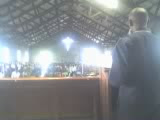
During the session, 2 walking people passed in front of the meeting room and were also interested by our message and now the president asked them to join us in the room because the voice and action of every one are needed. See 2 gentle men in black T-SHIRTS on photos.
5. Participants
In total 23 people attend the meeting among whom 6 females and 17 males and were interested by the activities of the day.
6. Evaluation of the session.
We expected 30 people for the meeting and brought together 23. This objective was reached in 76.66%. The second objective was reached in 100%. In all our performance was 88.33%. The main barriers for us to reach our maximum of goals were the background of the organization of the event, the moment and missing financial support. Doctors didn’t find time to join us because of their job at hospitals and we didn’t be able to organize transport for participants.
7. Questions and recommendations
Questions
- What is cancer ?
- What is the cause of cancer?
- Is there a link between sexual course and the disease? Does exist a sexual transmission of cancer?
- A woman with breast cancer can continue feeding her baby with the sick breast? Is there a transmission to child?
- From when are statistics of 7.9 millions of deaths/year by cancer and 5.4 millions of deaths/year by tobacco?
- A person with cancer can still alive how many years?
- Where do you place hard work of teachers? Can this replace physical effort to address risk of cancer?
- With physical activities, how can some one know that he is making balance between eating and spending energy?
- How to get medicines of cancer in our community?
- Test VIH, TB, etc. exist; is there a test for cancer?
- What are symptoms of cancer?
- What to do to avoid overweight for children?
- What to say to a sick of cancer considering that medicines are not available in our community?
- Can a man proceed to the BSE of his wife?
- Can the breast feeding influence the volume of the breasts? If a child uses preferably one breast than another, this can create difference between the 2 breasts?
- There is a woman without child who presents bleeding of the nipple; this can be a sign of breast cancer?
- Is there a link between medical family planning and cancer?
- Prostate cancer can be linked to sexual courses?
- What type of cancer is more fatal than other?
Recommendations
At the end of the event, participants have recommended that:
- It is important to organize more events like this one to allow spreading the message that can save lives.
- To choose a place and a moment which allow more people to attend the event for the next time.
- Organize such event for all NGO which are members of RACID Network to permit them understanding the problem.
- Choose a moment for women and young girls to explain them the modes of prevention of cervical cancer and screening.
- We would like that Lance Armstrong Foundation play the role of funds mobilizator to allow support of such events for a real success.
8. Conclusions
Generally the activities of the day were well realized and it was a real success even if there were some difficulties. All was done as planed and our goals were reached. Participants were satisfied by the event and the message was new for almost 95% of them. They wished us to invite more people for the next occasion.
Goma, October 7th, 2009.
Dr Mateus KAMBALE SAHANI
AGIR ENSEMBLE/DRC.
AGIR ENSEMBLE joined LIVESTRONG Global Cancer Summit to make cancer a global priority
AGIR ENSEMBLE JOINED THE LIVESTRONG Global Cancer Summit
Summit
28 September 2009
LIVESTRONG is a valuable opportunity to raise international public awareness of the cancer epidemic, especially in developing countries, and we are pleased to have taken part in this first
LIVESTRONG attracted more than 500 participants from some 65 countries around the world. They included world leaders and policymakers, NGOs, business executives, cancer professionals and advocates.
IAEA has a mission to bring more attention and resources to the global cancer fight through its Programme of Action for Cancer Therapy (PACT). PACT, a LAF partner, is the IAEA's umbrella programme for cancer control efforts in developing countries. But till there nothing has been done by IAEA in DRC, a country which has 60,000,000 people and without any program of fight against cancer.
“When people leave here, we know that change will be effected and that lives will be affected. We know that lives will be saved because of the programs that are created and dreamed up here,” said summit organizer Lance Armstrong, at the opening of LIVESTRONG.
Seven times winner of the world renowned Tour de France bicycle race and founder of LAF, Armstrong is a survivor of a severe testicular cancer, diagnosed in 1996, which later metastasized to his lungs and brain.
On the first day of the event, Werner Burkart joined a panel of experts to discuss the Global Impact of Cancer. Chaired by CNN's medical correspondent Sanjay Gupta, the panel included John Seffrin, CEO of the American Cancer Society (ACS), Christopher Wild, Director of the International Agency for Research on Cancer (IARC) and Lynn Faulds-Wood, President of the European Cancer Patient Coalition (ECPC).
The IAEA provides developing countries with technical expertise and equipment related to radiation medicine – a vital component in the treatment of cancer. The IAEA is working in partnership with the global health leader, the World Health Organization (WHO) and other international partners to bring more attention and resources to the global cancer fight. Our government must do more efforts and show its commitment for our population to benefit this technical expertise and equipment.
Speaking after the event, Burkart said: “The IAEA, after decades of experience helping developing countries cope with the burden of cancer, has been advocating for cancer to be added to the global health agenda, and ultimately become part of the Millennium Development Goals. The
A highlight of the
Commenting on the report, Dr Ala Alwan, the World Health Organization's Assistant Director-General for Non communicable Diseases and Mental Health, said: “These new data delineate a stark trajectory for cancer if immediate action is not taken. The rise of cancer creates an enormous burden on health systems around the world. But this is not just a health challenge; it undermines economic growth and acts as a chronic poverty trap for the poorest countries.”
And it is in developing countries that the cancer burden shows the steepest increase. Evidence shows that nearly half of all new cancer cases this year will be in low- and middle-income countries, and that figure is likely to increase dramatically over the next decade to as much as 75%. Yet currently only five percent of global resources for cancer are spent in the world's poorest nations.
Among the most important outcomes of the
The main goal of our government could be the building of international partnerships with IAEA and others partners to help our country establishing healthcare systems that provide early detection and timely and effective treatment for all cancer patients everywhere in the country and to concept a National Cancer Control Plan (NCCP).
AGIR ENSEMBLE would like to alert all of conscientious leaders in DRC especially doctors and all health care professionals to put cancer on their agenda of priority because if leaders as us don’t speak about cancer, other people don’t pay attention on it.
By now it is known that 30% of cancers are preventable and 30% other are curable. We may prevent the preventable and cure the curable but this demands our commitment to act and raise awareness people and to educate policy makers to make cancer a global priority.
Thank you.
Dr Mateus K. SAHANI, AGIR ENSEMBLE.
samedi 8 novembre 2008
Breast cancer awareness month at Goma
Une seance de sensibilisation sur le cancer du sein a été réalisée a Goma avec les éleves de 6e années de l'Institut Mont Goma dans le cadre du programme Pink October de l'UICC. Cette séance avait pour but de tenir informer les jeunes filles de l'ampleur du probleme du cancer du sein et leurs expliquer les methodes de prevention ainsi que celles permettant la détection precoce du cancer du sein.
Le rapport complet avec photos sera publié dans les jours qui suivent.
Dr Mateus SAHANI.
vendredi 19 septembre 2008
Le combat contre cancer du col, une priorite pour AGIR ENSEMBLE

Aujourd'hui le cancer du col uterin est repute etre la 2e cause de deces par cancer dancer et constitue l'un des cancer les plus frequents dans le monde. C'est ainsi que AGIR ENSEMBLE/UICC-DRC se fixe pour mission prioritaire de combatre ce probleme en se lancant dans la prevention par la campagne de sensibilisation de la masse feminine sur les signes d'alerte, le programme de depistage des lesions precancereuses. Ce programme pourra etre effectif au debut de l'annee prochaine, 2009.
Merci,
Dr Mateus SAHANI.
dimanche 20 avril 2008
La Tuberculose, une malade a combattre energiquement


Rapport synthétique des activités anti-TB
La TB est une maladie infectieuse contagieuse et se transmet d’une personne infectée a une autre saine par contact via les gouttelettes de Pfludge.
Nos activités anti-TB se regroupe en 2 types : préventives et curatives.
Dans nos activités préventives, nous procédons surtout a l’éducation de la masse populaire sur le mode de vie et les mesures pour se protéger contre la contamination tuberculeuse et le mode de vie d’un tuberculeux vis-à-vis de son entourage : éviter de cracher n’importe ou, mettre la mais sur la bouche quant on tousse ou quand on baille, la position a adopter quand on s’assoit avec une personne infectée.
Ces activités se font a travers une organisation de la société civile dont je suis membre et directeur du département de Santé. Cette ONG s’appelle AGIR ENSEMBLE basée à Goma/RDC.
Dans nos activités curatives, nous recevons en consultation au moins 1 a 2 nouveau(x) cas par jour de malades avec une toux chronique suspecte de TB, ce qui nous pousse a faire les investigations. Nous avons à peu près une moyenne de 40 malades suspects de TB par mois parmi lesquels quelques uns sont perdus de vue au cours des investigations si la 1ere et 2e série de crachat n’est pas positives.
Pour le moment nous avons, à notre charge 20 personnes sous traitements anti-TB dont 13 adultes et 7 enfants sous prophylaxie a l’INH. Ces 7 enfants sont issus de 3 familles en raison de 3-2-2 ayant été en contact avec leurs mères avant la découverte de la maladie.
Parmi les 13 adultes 8 sont de sexe féminin et 5 de sexe masculin.
Trois malades sur 13 sont co-infectes par le VIH et a ce stade ils suivent le 2 types de traitement.
Parmi les 13 malades, 11 suivent le traitement en ambulatoire et 2 sont hospitalises car leur état de permet pas la réussite de la stratégie DOT que nous appliquons.
Sur 13 cas, 10 ont été diagnostiques TPM +, 3 TPM- par Rx confrontee a la clinique.
NB : ce mini rapport ne concerne que les malades que je suis en train de suivre à la polyclinique du Carrefour à Kigali/Rwanda. Le chiffre est tellement grand pour l’hôpital de Virunga à Goma/RDC.
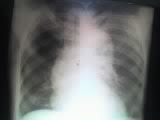
A ce rapport je joint un cliché d’un malade TPM+ dépisté a partir du 11 Avril 2008 et qui a commencé le traitement aujourd’hui le 14 Avril 2008.
Dr Mateus SAHANI
AGIR ENSEMBLE/ STOP TB PARTNERSHIP
samedi 15 mars 2008
Une surprise desaggreable:tumeur de la vessie.


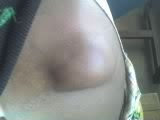
Une surprise m'a ete desagreable lors de l'operation de cesarienne avec comme indication un dysproportion cephalopelvienne, en decouvrant fortuitement un tumeur de la vessie en per aperatoire. Mais une chose qui tique est qu'avant le debut de l'intervention, a apparue une deformation abdominale faisant penser a un syndrome de prerupture uterine mais les signes n'etaient pas tous reunis pour conclure. Ce qui m'amenait a croire qu'il s'agissait d'une deformation de l'uterus.
Apres l'ouverture de la paroi abdominale en pleine intervention, nous avons decouvert une grosse tumeur vessicale molle, hypervascularisee. Heureusement que nous avons pu trouver un endroit pour l'incision uterine sans toucher la tumeur et nous avons extrait un nouveau ne vivant, de sexe feminin, pesant 3kg et 400g.
Dans notre hopital, nous n'avons pas tous les necessaires pour faire la biopsie et nous avons pu fermer sans rien faire pour la tumeur.
Merci.
Dr Mateus SAHANI.
Inscription à :
Articles (Atom)